

As a parent of a child with special needs, wouldn’t it be great to receive a year-end report card showing improvements like:
Improved attention
- Able to sit through lessons
- Completing schoolwork with less prompting
Reduced hyperactivity
- Less fidgeting
- More physically settled
Better impulse control
- Fewer interruptions
- More thoughtful responses
Stronger working memory
- Following multi-step instructions
- Remembering tasks more easily
Emotional improvements
- Fewer meltdowns
- Less frustration
Some parents hope to see these changes with Attention Deficit/Hyperactivity Disorder (ADHD) medications. While some children respond well, others do not—and some may even worsen.
This article explains why.
HOW DO ADHD MEDICATIONS WORK?
Most ADHD medications act on dopamine, a key “reward” neurotransmitter.
Dopamine helps:
- Reinforce behavior
- Support focus and motivation
- Enhance learning and memory
- Aid decision-making
When dopamine signaling is functioning well, children are better able to stay engaged, complete tasks, and regulate behavior.
ADHD medications work primarily by:
- Blocking dopamine reuptake
- Increasing dopamine availability in the brain
This strengthens signaling in areas responsible for attention and executive function.
Natural Ways to Support Dopamine
Medication is not the only way to support dopamine function. There are several foundational strategies:
1. Eat Foods Rich in Dopamine Building Blocks
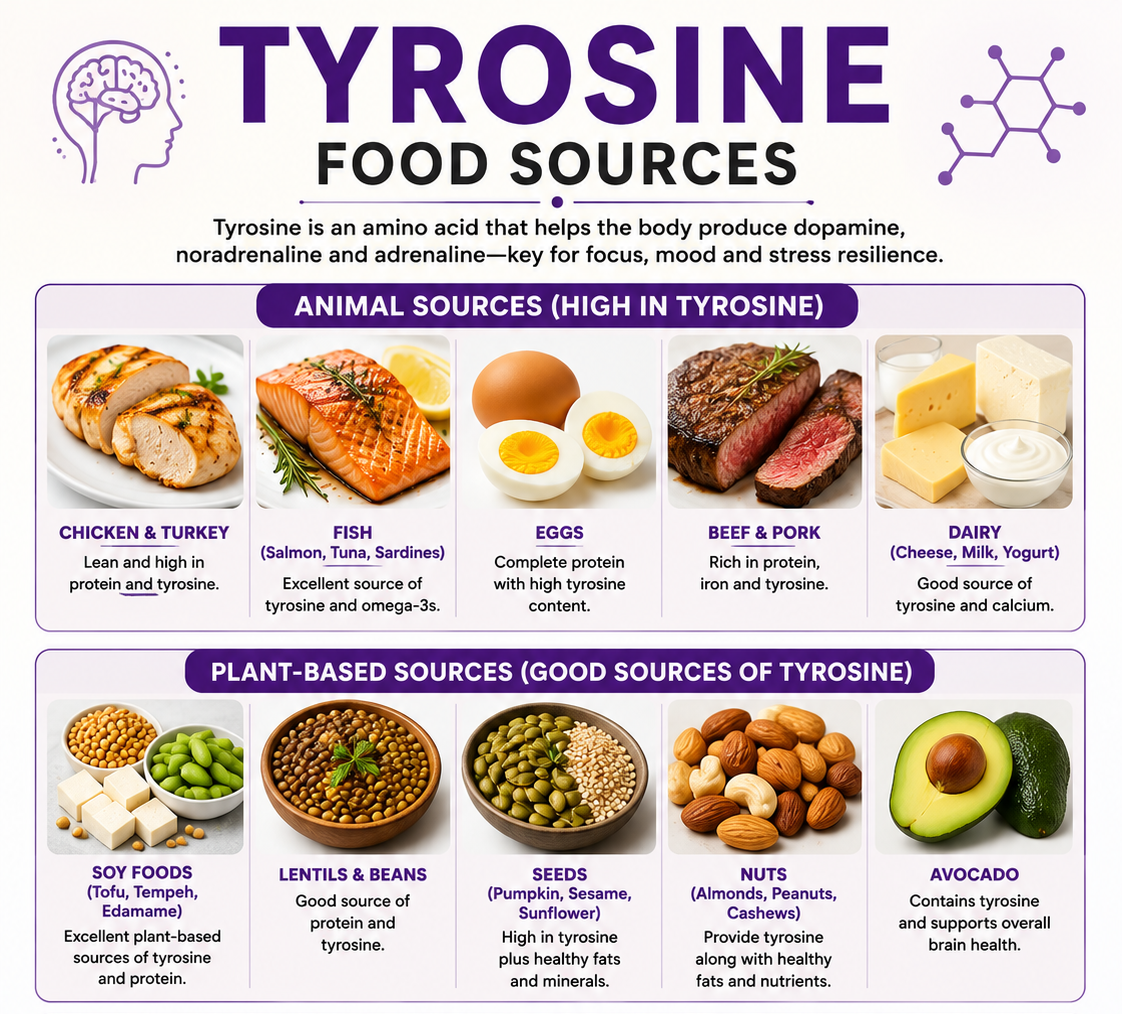
Tyrosine is an amino acid required to produce dopamine, as well as adrenaline and thyroid hormones.
Rich sources include:
- Animal: beef, pork, chicken, turkey, eggs, dairy
- Plant: soy, lentils, beans, avocado, nuts, seeds
2. Ensure Adequate Cofactors
Tyrosine alone is not enough. The body also needs key nutrients to convert it into dopamine.
Important cofactors include:
- Zinc
- Vitamin C
- Vitamin D
- Vitamin B-complex, especially Vitamin B6
Without these, dopamine production may be inefficient.
3. Encourage Exercise and Regular Movement
One of the best ways to increase dopamine production is through exercise.
Pre-schools have rightly been designed to encourage young children to run around the playground during breaks. This helps them focus better during class hours. Some schools even encourage fidget toys, which also increase dopamine and, therefore, focus.
4. Manage stress
After dopamine is produced, it can be further metabolized into noradrenaline and adrenaline. These brain chemicals are triggered during alarming situations and help manage stress.
Thus, a child who is continuously exposed to stressful situations may inadvertently deplete dopamine reserves.
Stress management through breathing exercises, doing hobbies, or play therapy for younger children can help rebalance neurotransmitter levels.
Why Do Some Children Respond Negatively to ADHD Medication?
ADHD medications are often based on the assumption that children with special needs have low dopamine, and that simply increasing dopamine levels will help alleviate symptoms.
Children who truly have low dopamine can certainly benefit from these medications.
However, the idea that all children with ADHD have low dopamine is an oversimplified model. In reality, there is often a dysregulation of brain signaling systems.
For children with dopamine dysregulation—such as excessively high dopamine levels, under-responsive or over-responsive dopamine receptors, or inefficient dopamine clearance—increasing dopamine through medication can actually worsen symptoms.
Most common ADHD medications work by inhibiting the dopamine reuptake (recycling) system, thereby increasing dopamine availability in the brain. However, this system is only one part of a much more complex picture and not the sole cause of dopamine imbalance.
Accessing Dopamine Levels Through Nutrigenomics
There are many possible causes of dopamine imbalances. Advances in nutrigenomics can now identify genetic variations—known as Single Nucleotide Polymorphisms (SNPs)—that influence dopamine function.
These SNPs can affect whether dopamine-related processes are faster or slower, and whether they function optimally or suboptimally.
Genetic variations can determine whether biological processes occur too quickly, too slowly, or at optimal levels. In relation to dopamine, these variations can impact production, utilization, signaling, recycling, and elimination pathways.
A nutrigenomics test can help identify:
- Whether the body can efficiently convert nutrients into dopamine
- Whether dopamine receptors are sensitive and responsive, or blunted
- Whether dopamine recycling processes are efficient
- Whether dopamine is properly broken down and cleared after use
- Whether dopamine is diverted into other neurotransmitters too fast or slow
(See image for reference)

When a dopamine imbalance is identified, a targeted nutrition plan can be implemented to help regulate these processes, which may naturally improve ADHD symptoms.
To learn more about nutrigenomics, visit Lifecode Gx, the leading experts in nutrigenomics testing and education: https://www.lifecodegx.com/products
To find out if you or your child may benefit from Lifecode Gx’s nutrigenomics test, sign up for a free 30-minute consultation: https://www.chrisyperez.com/book-appointment/
REFERENCES:
MacDonald, H. J., Kleppe, R., Szigetvari, P. D., & Haavik, J. (2024). The dopamine hypothesis for ADHD: An evaluation of evidence accumulated from human studies and animal models. Frontiers in psychiatry, 15, 1492126. https://doi.org/10.3389/fpsyt.2024.1492126
Madhusoodanan, J. (2026). Untangling the connection between dopamine and ADHD. Nature. https://doi.org/10.1038/d41586-026-00094-x
Marques, A., Marconcin, P., Werneck, A. O., Ferrari, G., Gouveia, É. R., Kliegel, M., Peralta, M., & Ihle, A. (2021). Bidirectional Association between Physical Activity and Dopamine Across Adulthood-A Systematic Review. Brain sciences, 11(7), 829. https://doi.org/10.3390/brainsci11070829
Verghese, C., Patel, P., & Abdijadid, S. (2024). Methylphenidate. In StatPearls. StatPearls Publishing. https://www.ncbi.nlm.nih.gov/books/NBK482451/
